Automation of Network Settings for Enhancing Network Reliability and Construction of a Multi-Cloud Network Environment Using SINET
Hiroshima University is undertaking university-wide initiatives to centralize the management and operations of its campus networks. We interviewed Professor Toru Kondo, Director of the Information Media Center, Hiroshima University and Reiji Aibara, professor (special designation) and senior research manager, Hiroshima University, about the initiative for constructing a campus network that provides secure and high-speed connections to a multi-cloud environment via SINET. (Interview date: March 9, 2026)
Please provide an outline of Hiroshima University’s campus network.
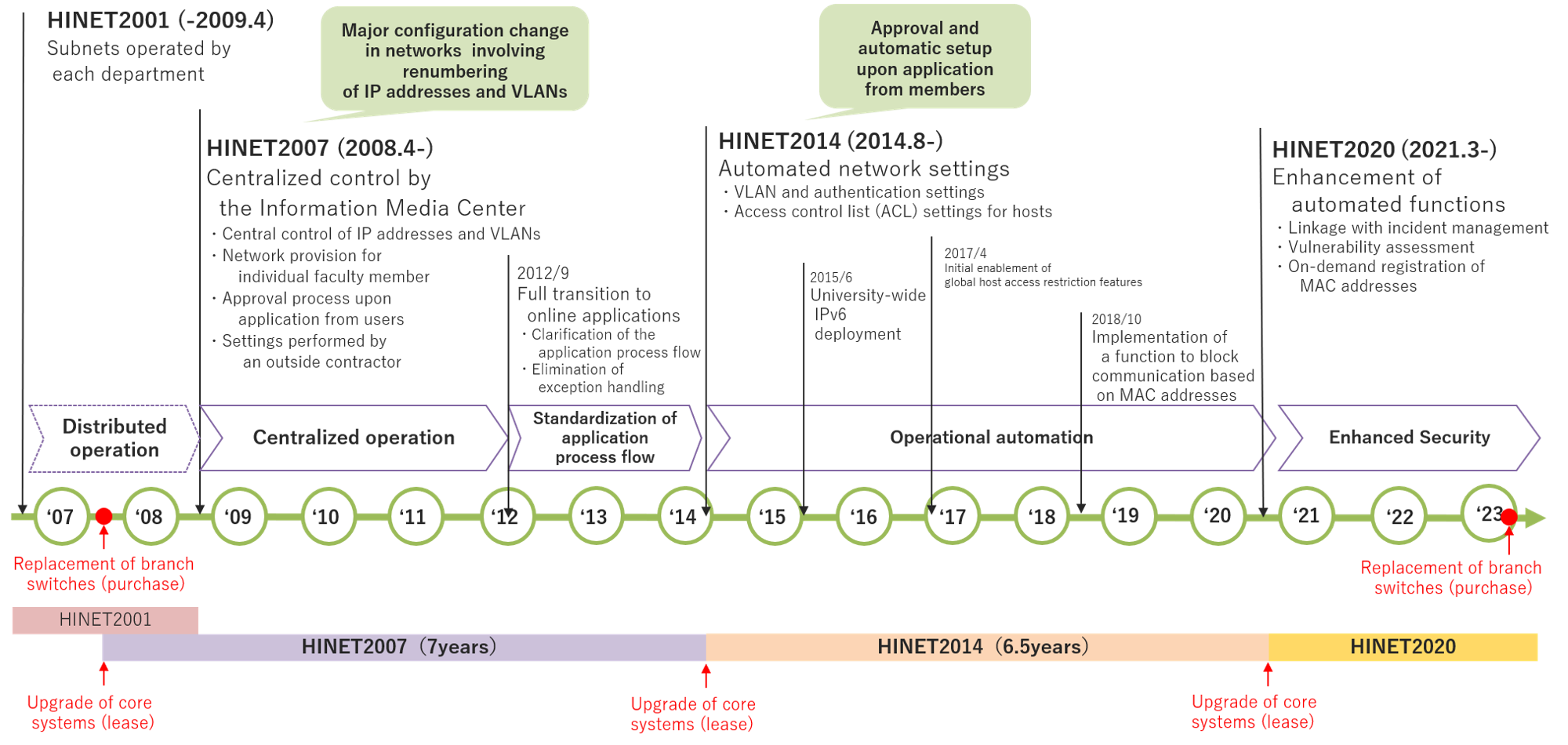
Kondo: Our campus network, called HINET, was operated by allocating subnets to separate offices and departments until 2007, when it transitioned to university-wide centralized control. After that, the core systems were relocated to the data center in 2014, and distribution switches were placed at individual campuses, forming a star-shaped topology.
HINET has three significant characteristics.
Firstly, network switches at all buildings and on floors across the campus are centrally controlled, and the network settings are automated. We introduced this system in 2014. Users submit applications through the network usage application system, and the required VLAN and authentication settings are then automatically applied to floor switches.
Secondly, the user authentication function ensures traceability by recording who used the network, when and where. It has been in operation since 2007, with a log that associates MAC addresses, IP addresses, and user information for future reference. This enables prompt responses to security incidents and failures. At our university, students have been required to bring their own personal computers with them since the 2015 academic year. In recent years, the campus Wi-Fi has been used not only with computers but also with smartphones, tablets, and many other types of devices, making it essential to manage the association between users and their devices.
Thirdly, an IPv4/IPv6 dual stack environment has been in place across the university since 2014. As the core systems provide a centralized network connection environment, users use IPv6 communication without realizing it. The current traffic statistics show that IPv6 carries 50% to 60% of the traffic.
In the 2020 upgrade of the core systems, we strengthened security functions and enhanced the incident response framework, including collaboration with the NII Security Operation Collaboration Services (NII-SOCS). A future challenge is to further advance operations by automating the processes of detecting, identifying, and responding to unauthorized communications, as well as confirming responses after user notification. We will continue working to enhance security.
What difficulties did you face when working on network automation?
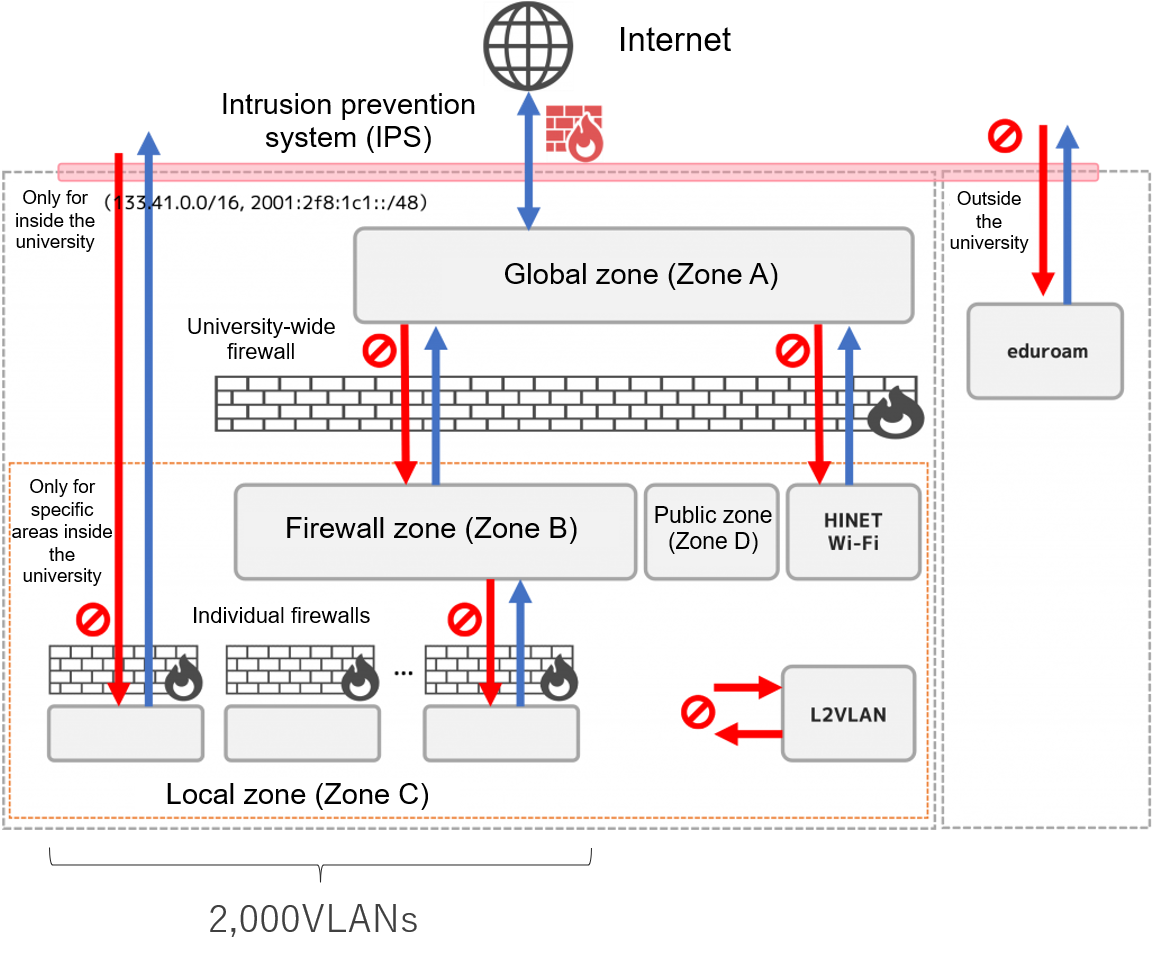
Kondo: We have been continually improving HINET since 2007. Particularly significant was implementation of micro-segmentation. At universities, main core activities are conducted by individual laboratories and faculty members. With management by each large office or department, it is difficult to implement fine-grained security control. Therefore, we adopted a policy of dividing the network into smaller segments so that administrators can more easily monitor terminals connecting to the network. HINET is designed to accommodate up to 2,000 subnets, so it is possible to allocate subnets to individual laboratories and faculty members. Physically neighboring laboratories are logically separated and treated as outside of one another.
To manage and operate multiple segments, we introduced automation for network settings. Hiroshima University has established a system that automatically applies settings to the required subnets (VLANs) across buildings and floors after a member submits an application through the online network usage application system.
Traditionally, grouping multiple physically separate locations into a single segment required a tremendous amount of work. We, as network operators, had to change switch settings manually. However, by converting the network topology and switch port configuration into a database and linking it with the application workflow made it possible to apply settings to the switches instantly without human intervention.
Please tell us about the network configuration.
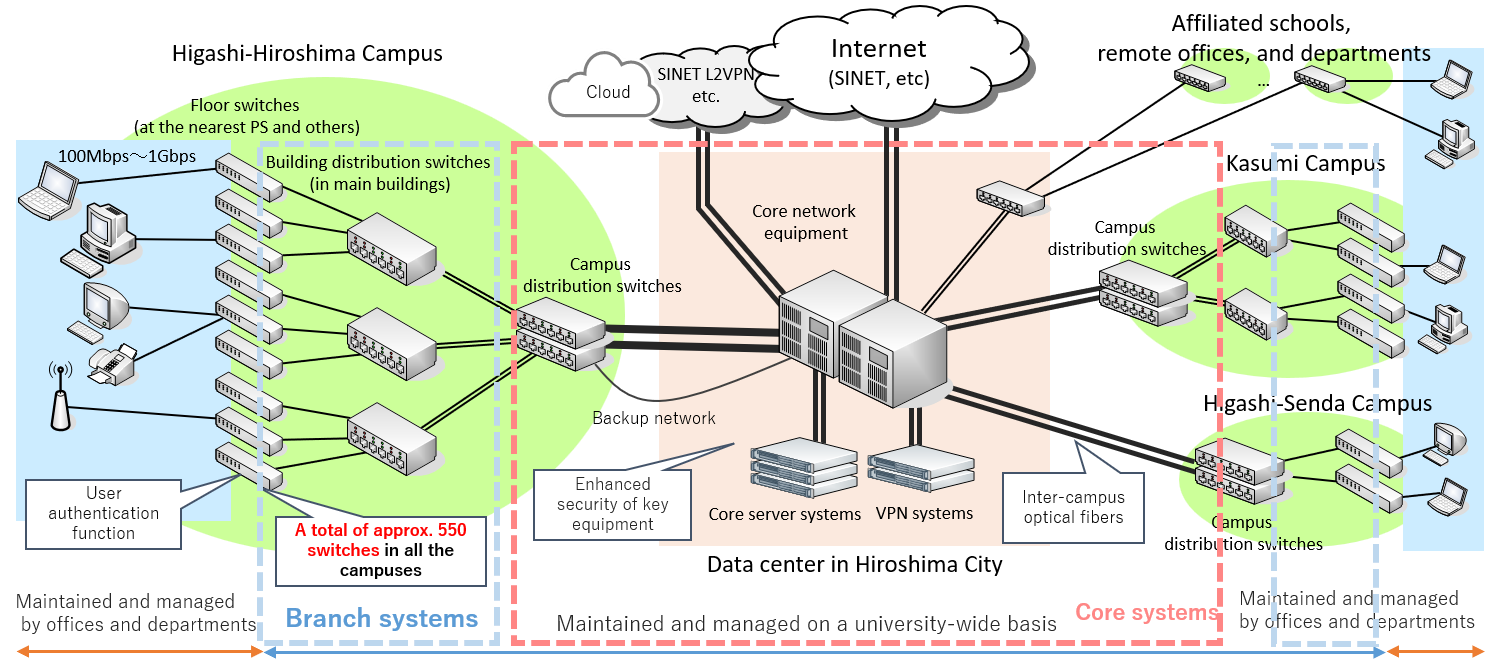
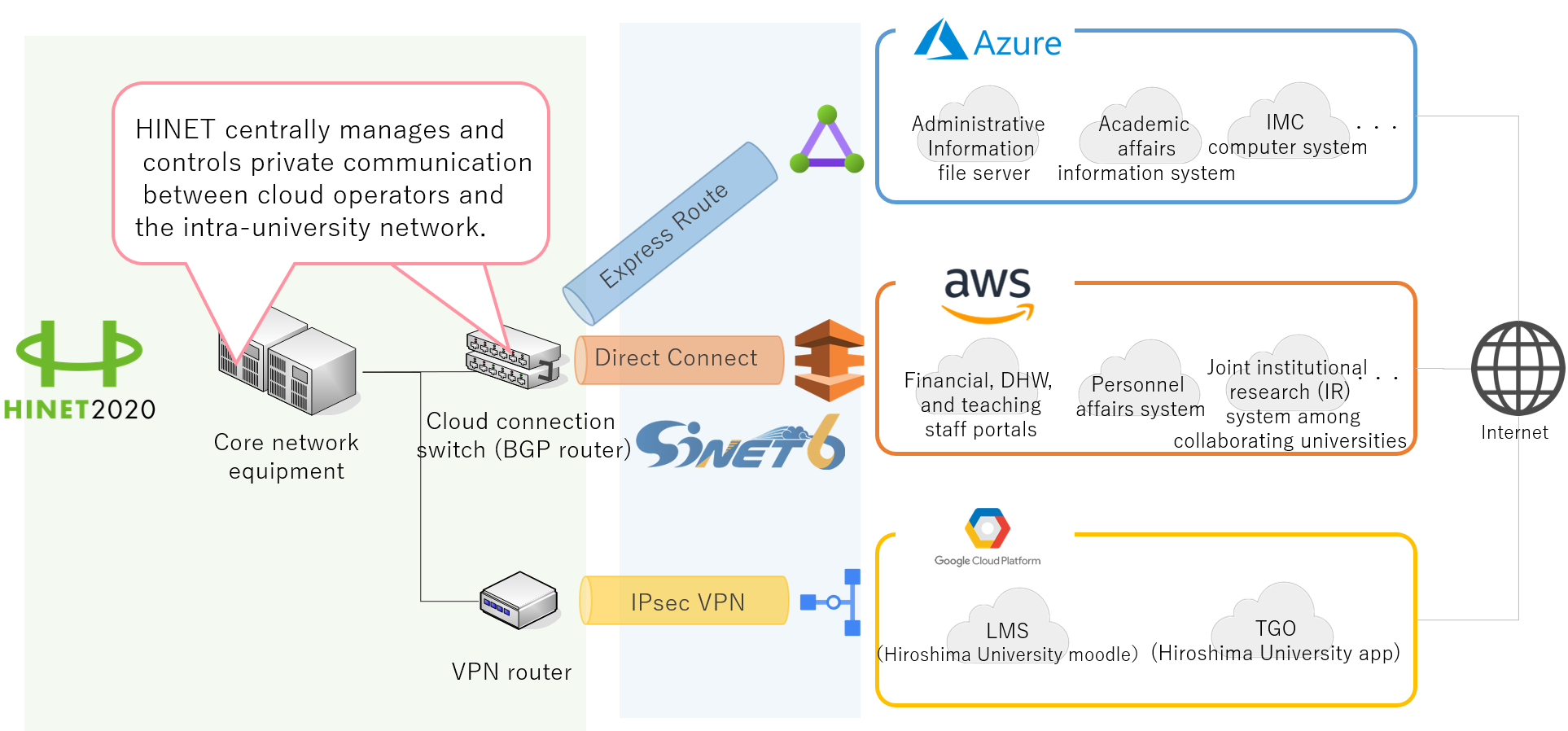
Kondo: For connections to external locations (commodity use), Hiroshima University connects to SINET at 2×10 Gbps via SuperCSI, a network connection service for academic and research institutions in the Hiroshima region. L2VPN connects directly to SINET’s Hiroshima node at 2×10 Gbps. A characteristic of our network is that external network (commodity use) connections are separate from the cloud connection for research projects and administrative operations.
Hiroshima University has adopted a configuration centered on a public cloud connections rather than servers installed and operated within the university or at a data center. We use SINET’s cloud connection services and related services. In so doing, we introduced a connection to Amazon Web Services (AWS) in 2014, followed by connections to Azure and Google Cloud Platform (GCP). In addition, we have created original Hiroshima University Guidelines for Use of cloud services to establish a framework in which proper checks—based on the checklist—are performed when individual offices, departments, and administrative organizations use cloud services.
Can you give us an example of the use of local 5G?
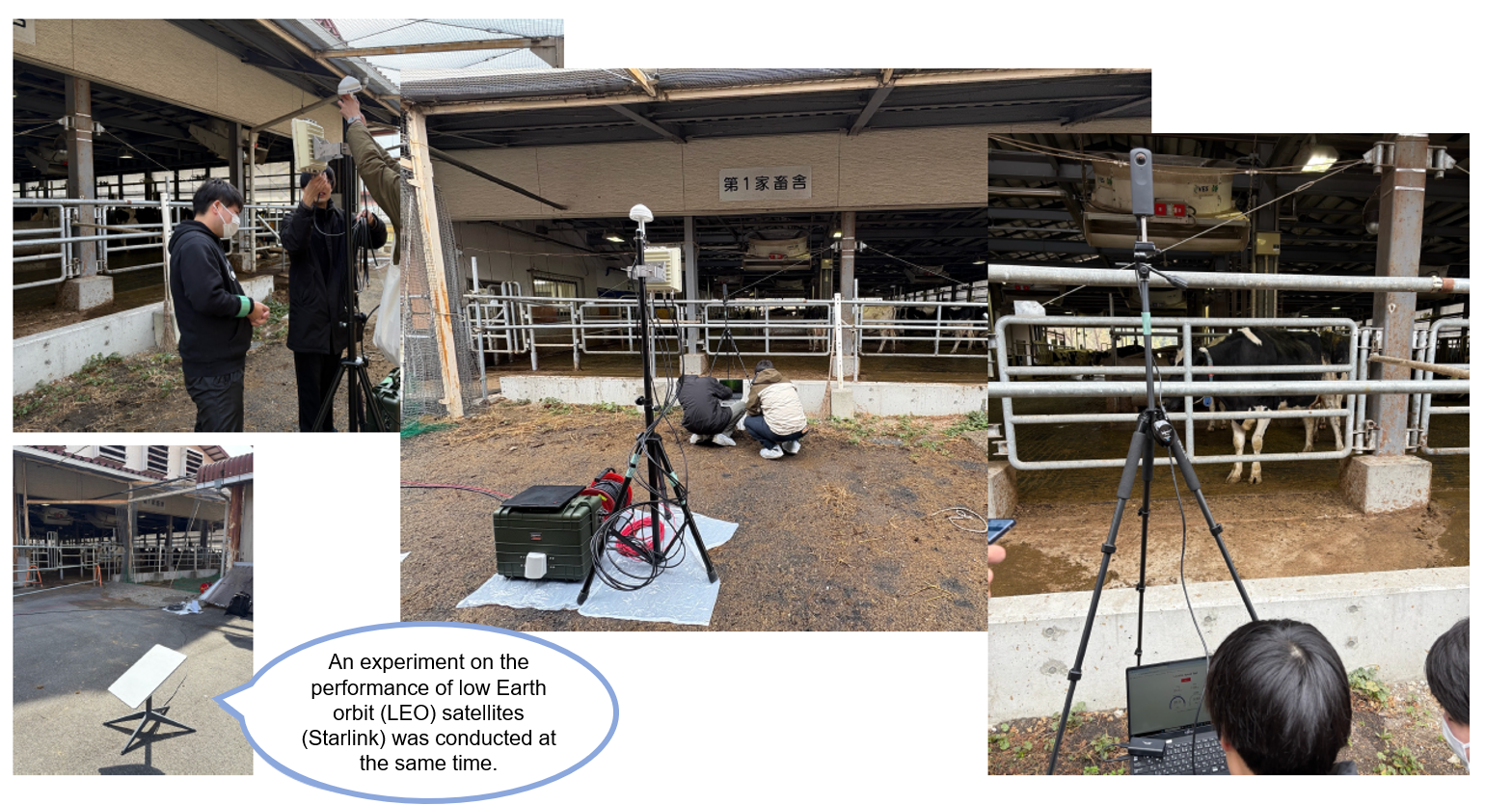
Kondo: We are also using the campus as a field for verifying the latest technologies. One example is the use of local 5G and mobile SINET on a farm, as part of a joint research project with the National Institute of Informatics (NII). Its purpose was to examine the potential of a secure data collection platform in collaboration with SINET’s mobile communication environment in mountainous areas, outdoors, and other areas where Wi-Fi signals struggle to reach. Specifically, we conducted real-time streaming of the status of workers and cattle in a cattle house, captured with a 360-degree camera and sensors, to assess the potential for remote monitoring and use in seminars and other educational sessions.
Meanwhile, initiatives like this still require stronger support and operational structures. In particular, local 5G operations require obtaining a license, preparing dedicated terminals, and securing a power source. An environment that will allow researchers to use it routinely should be established in the future.
What is the future outlook for the project?
Kondo: I think that strengthening collaboration among universities and across regions will be important. The network has already taken root as infrastructure, but I feel that opportunities for communication among university network operators are diminishing, even when they are in close proximity. I want us to consider providing a platform for exchange and collaboration among academic institutions to build a community of university network operators, share operational information within the community, share experimental tools and equipment, and respond to new technologies.
We will also work proactively to introduce new technologies to the campus network. Take the IPv6 connectivity, for example. Today, we provide a dual-stack IPv4/IPv6 environment. As a next step, we are considering shift to a IPv6-mostly environment, an IPv6-only environment, or other future-oriented technologies. In doing so, we will need to address technical issues such as how to maintain connectivity with the conventional IPv4 Internet, in other words, how to handle address translation. Ensuring traceability of connecting terminals is another important issue. We need to closely examine desirable forms of design and operation to ensure long-term stable operation. I feel it is important that these issues should be addressed not only by separate organizations but in collaboration with SINET, including the provision of information and the construction of a support structure.