SINET6’s Roles in Construction of a Research Data Platform in Japan for Nuclear Fusion Demonstration Reactor
The National Institute of Quantum Science and Technology (QST) has research facilities in the field of nuclear fusion energy all over Japan. It also participates in the ITER Project for international experimental nuclear fusion reactors being constructed in France, as a Japanese implementation body. We spoke to Yasutomo Ishii, Director, Department of Fusion Reactor Systems Research, QST Rokkasho Institute for Fusion Energy; Naoaki Miyato, Leader of the department’s BA Project Planning and Coordination Group; and Shinsuke Tokunaga, the department’s Principal Engineer, about the overview of QST and about the roles that SINET6 played in it. (Interview date: November 12, 2025)
Please tell us about QST’s roles in developing a demonstration reactor for nuclear fusion.
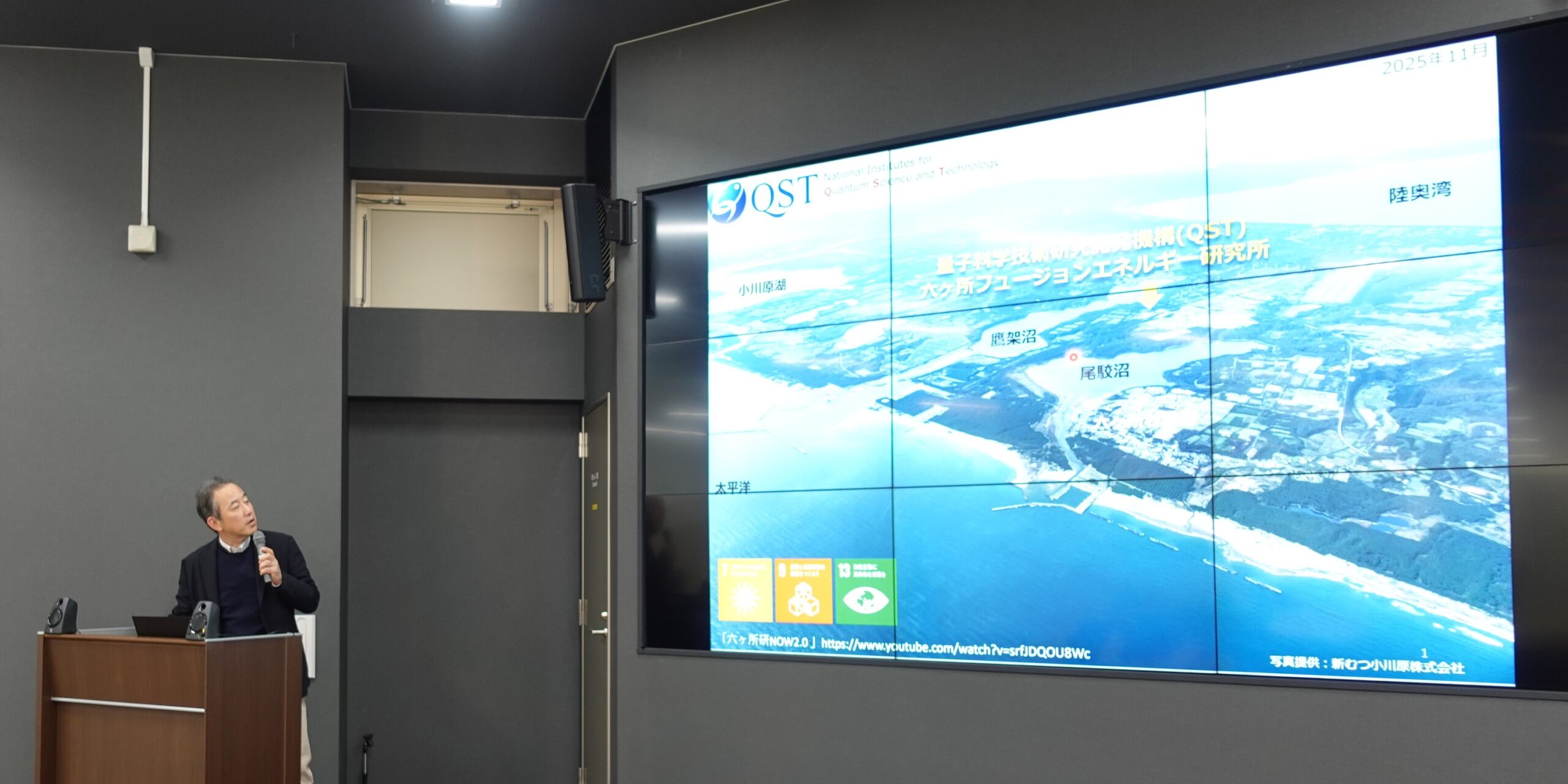
Ishii: QST is a research institution established in 2016 by integrating the former National Institute for Radiological Sciences and part of the Japan Atomic Energy Agency (JAEA). It has a large number of research bases across the country, spanning from Rokkasho-mura in Aomori Prefecture to the Harima district in Hyogo Prefecture. In addition, it has a site at the ITER international thermonuclear experimental reactor at Saint-Paul-lès-Durance in France.
QST conducts research in a wide variety of fields. The institutes at Takasaki and at Kansai are engaged in research using particle beams and lasers, the Institute for Quantum Life Science in the development of quantum sensing technologies, the Institute for Quantum Medical Science in research on heavy particle beam treatments, the QST Hospital in special radiation therapy, and the Institute for Radiological Science in research on the impacts of radiation on human bodies.
In addition, QST conducts research and development to enable swift realization of nuclear fusion energy. The QST Naka Institute for Fusion Science and Technology conducts experiments using the JT-60SA. The step after these projects will be the construction of a nuclear fusion demonstration reactor to demonstrate power generation.
The QST Rokkasho Institute for Fusion Energy (hereinafter, “the Rokkasho Institute”) plays a central role in constructing a research platform for the development of demonstration reactors.
What kind of energy does nuclear fusion produce?
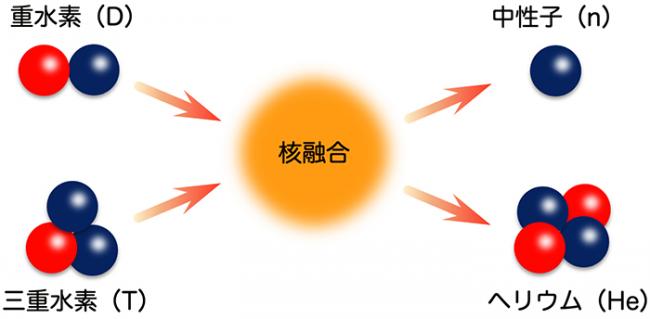
Ishii: Nuclear fusion is a technology that uses energy generated by fusing deuterium with tritium. It reproduces the same principle that fuels the Sun’s glow here on Earth, extracting enormous amounts of energy without emitting carbon dioxide. The realization of this “Sun on Earth” power has the potential to fundamentally solve humankind’s energy issues. The nuclear fusion reaction generates helium and neutrons. Unlike nuclear fission, it generates no high-level radioactive waste. Nuclear fusion reactor walls will be irradiated by neutrons. This is low-level radioactive waste. Its radioactivity will weaken sufficiently after storage for around 100 years.
Nuclear fusion has an advantage in that deuterium is abundant in seawater, while lithium, as a raw material for tritium, can also be obtained from seawater. They are evenly distributed on the planet. Other advantages include the ability to stop the reaction instantly in the event of an emergency and high energy efficiency. The development of nuclear fusion reactors requires technologies across an extensive range of fields, including chemistry, engineering, and information technology. We expect that it will have a significant stimulating effect on other technological fields.
What achievements have you made so far?
Ishii: Among QST’s technology development initiatives, the development of a membrane to separate lithium from seawater was a notable achievement with a particularly significant ripple effect across other fields. This technology has already been patented, and commercialization efforts are being made by a business venture recognized by QST. In addition, QST has also developed a technology to melt lithium ores at ambient temperatures and pressures. It emits 80% less CO2 than the conventional method, which uses high temperatures (around 2,000°C) and high pressures, and requires about one-tenth the plant space. This technology has also been spun off to form another business venture. The technology of melting lithium ores at ambient temperatures and pressures is considered of great importance from the perspective of economic security, given that it may possibly establish Japan’s original supply chain.
Including elemental technologies beyond those mentioned above, nuclear fusion reactors may also drive the development of many different industries in the future.
Please tell us about the overview of the ITER Remote Experimentation Center project.
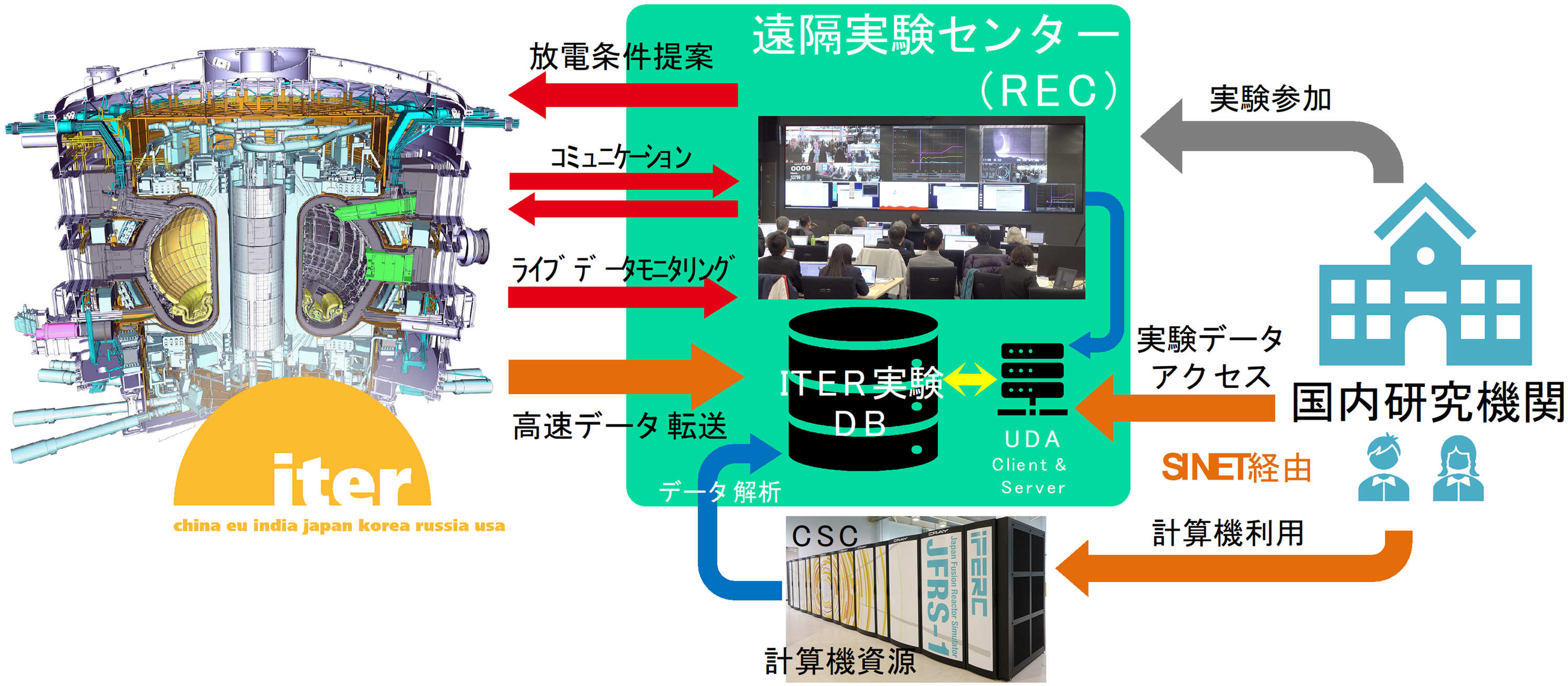
Tokunaga: This project has two major objectives. The first objective is to build an environment for participating in ITER experiments from Japan. ITER, an international nuclear fusion experiment reactor project, is located at Saint-Paul-lès-Durance in France. Japan is the geographically most distant among the ITER members. It is not easy for Japan-based researchers to join experiments there. For this reason, we are developing technologies for and constructing an environment that allows them to participate remotely and effectively in experiments. I think that experiment leaders need to be on site, but a system has been developed that enables other researchers to participate remotely in experiments and view data in real time. The second objective is to develop technologies to transfer data generated at ITER to Japan to make the most of it in demonstration reactor development. It is anticipated that as much as 200-400 petabytes (PB) of data will be created per year after the start of ITER experiments. According to our plan, this data will be transferred to and stored at the Rokkasho Institute so that it can be used for analysis and research.
The realization of nuclear fusion clearly requires a data platform for analyzing enormous amounts of data. At the Rokkasho Institute, this is supported by SINET’s broadband, low-latency, secure network.
Please tell us about the network configuration as well.
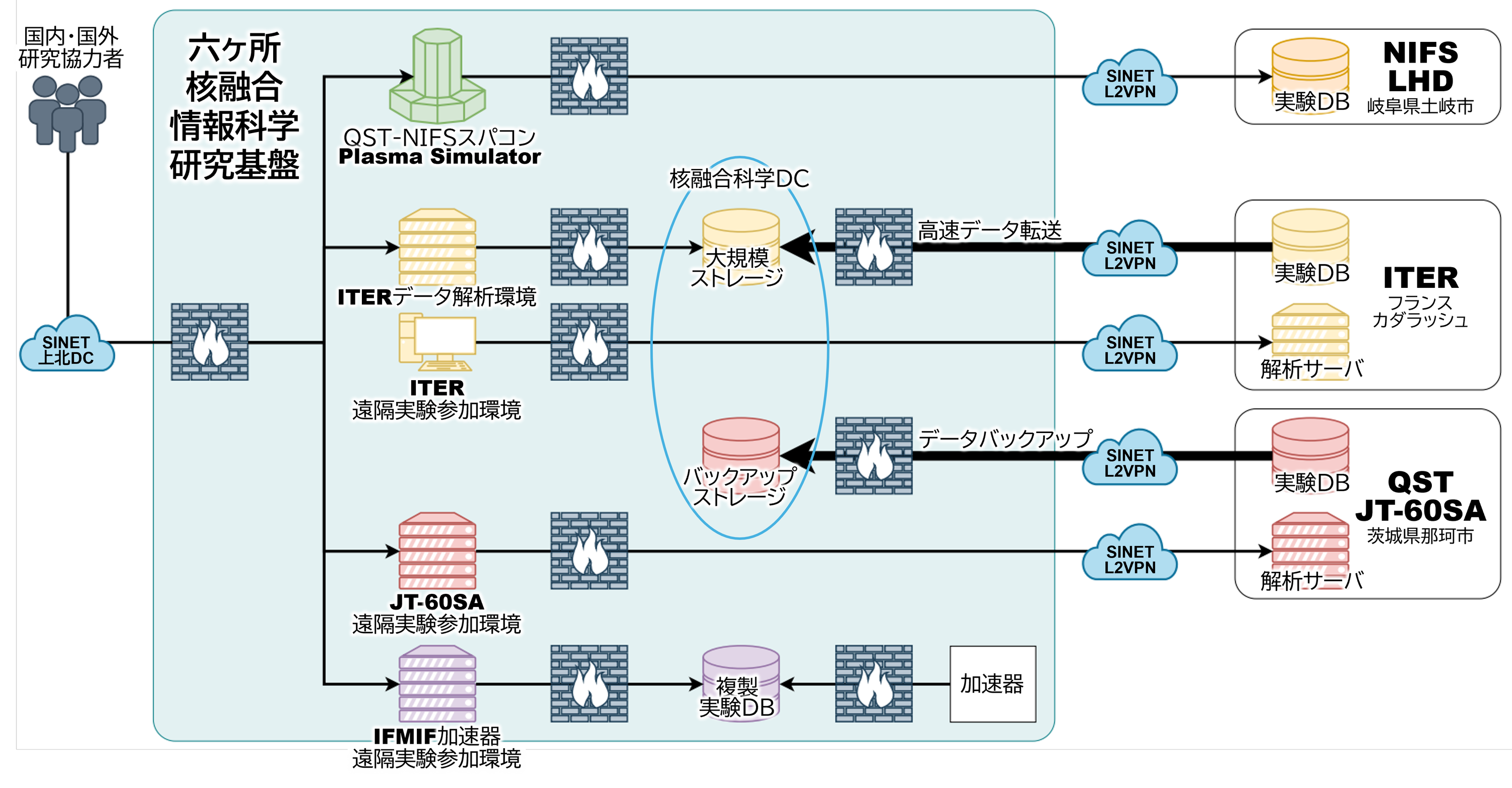
Tokunaga: The QST Rokkasho Institute is connected with SINET6’s Kamikita Data Center at 100 Gbps. Our major sites in Japan and overseas are interconnected via SINET’s L2VPN service. The ITER Data Distribution Center (IDDC) is directly linked to large-scale storage at the Rokkasho Institute via an international connection provided by SINET. Researchers at the Rokkasho Institute can understand the status of the equipment by accessing the operator interface (OPI) in ITER—equivalent to the interface for operators at the ITER main control room—from the ITER experiment remote participation environment.
The same goes for linkage within Japan. SINET’s network connects the QST Naka Institute in Naka, Ibaraki Prefecture, and the National Institute for Fusion Science in Toki, Gifu Prefecture, to the QST Rokkasho Institute. It makes copies between experiment databases at individual sites. The environment for remote participation in experiments provides a platform that allows researchers to work as if they were in a single large virtual research laboratory without feeling any physical distance.
Since high-capacity data transfers will be required after the start of ITER experiments, we are conducting a demonstration experiment on data transfers between ITER and the Rokkasho Institute.
This experiment adopts the Massively Multi-Connection File Transfer Protocol (MMCFTP) for long-distance high-speed file transfers and SINET’s international network interconnection. It has been confirmed that data can be transferred at nearly the full 100-Gbps communication bandwidth.
Reference) https://www.nii.ac.jp/news/2025/1111.html
What is the future outlook for the project?
Tokunaga: QST is working on a scheme for the tentatively named Fusion Informatics Center (FIC). Research on demonstration reactor design is conducted on the initiative of the Joint Special Design Team for Fusion DEMO, which is joined by universities, research institutions, and businesses across the country. As a platform for all-Japan industry-academia collaboration, FIC aims for the following.
Integration between the experiment and research platform with the theoretical simulation research platform: Development of digital twin control technologies and hybrid modeling research for combining theoretical models with data-driven ones will be conducted by integrating the JT-60SA experiment device at Naka with QST’s research platforms, including its supercomputer at Rokkasho.
Project-type joint research: A structure will be constructed for joint development of simulation codes, analysis codes and others by researchers and engineers based at physically distant locations on a shared cloud platform.
Standardization of data format (interface definition): It will be made possible to describe data produced from different devices and codes in a common language for facilitating use of data in artificial intelligence (AI) analysis and others.
Transformation of knowledge into assets: Processes of trial and error and design know-how that are not presented in academic papers will be accumulated as digital data.
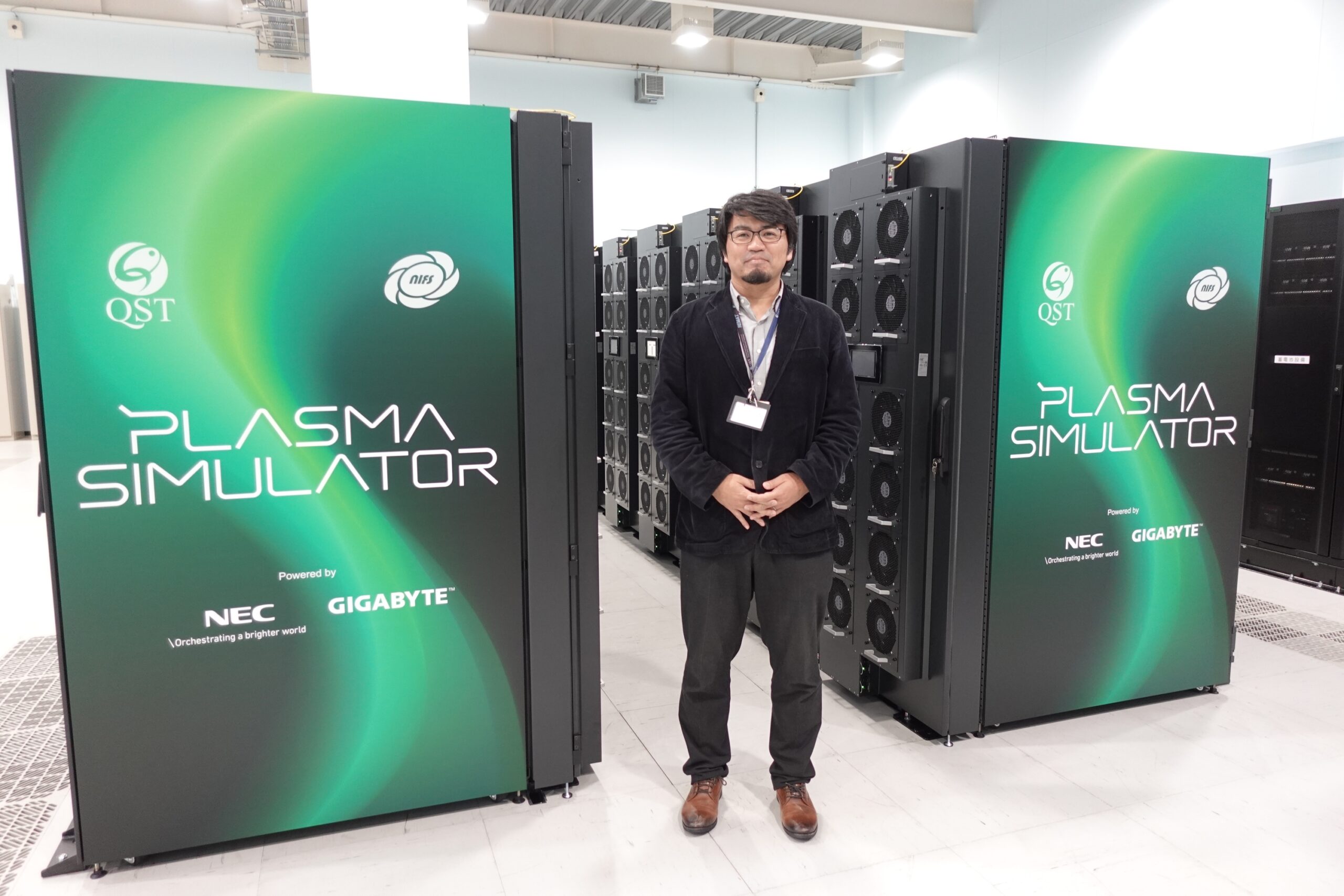
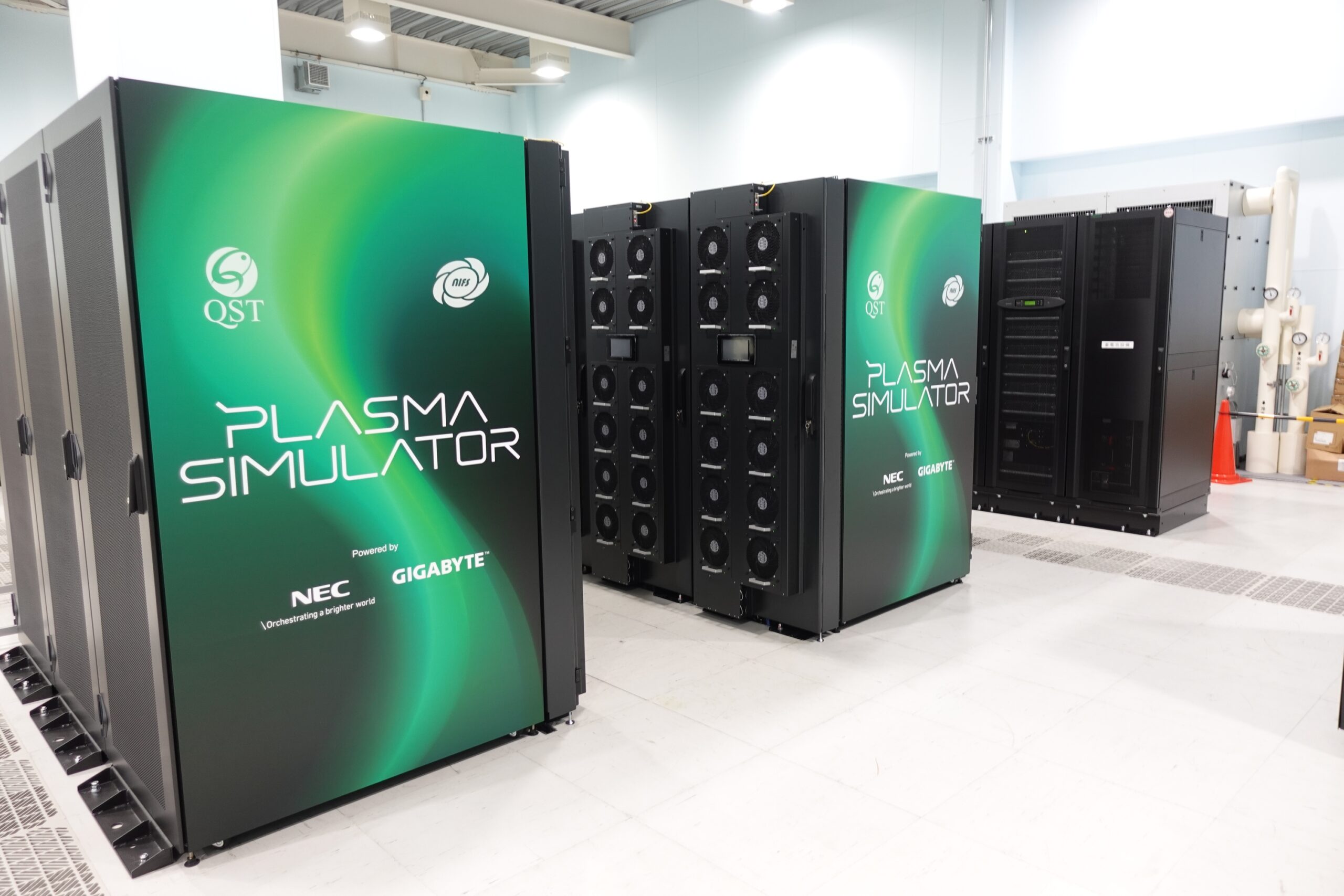
The Plasma Simulator supercomputer, which entered operation in July 2025, will be a powerful computing engine for the FIC. It is jointly operated by QST and the National Institute for Fusion Science (NIFS). It will be employed not only for large-scale simulations for demonstration reactor design but also for data analysis for ITER, the Large Helical Device (LHD) and others. In this respect as well, SINET’s stable communication platform will be of growing importance in the future.
In addition, I feel it is significant to pass on knowledge from research and development to future generations. Research and development in the field of nuclear fusion energy will last for several decades. There is a concern about loss of knowledge due to change of researchers and the passage of time. In particular, failure to properly record and save information—such as the scientific basis for day-to-day operations and judgments, and the conditions for calculations—may cause problems for future research and development. To address this issue, we will need to construct an AI-based knowledge management system and other mechanisms for storing and utilizing knowledge without increasing the burden on researchers.