Telecommunications for IoT-Linked Telemedicine in Mountainous Areas with Heavy Snowfall
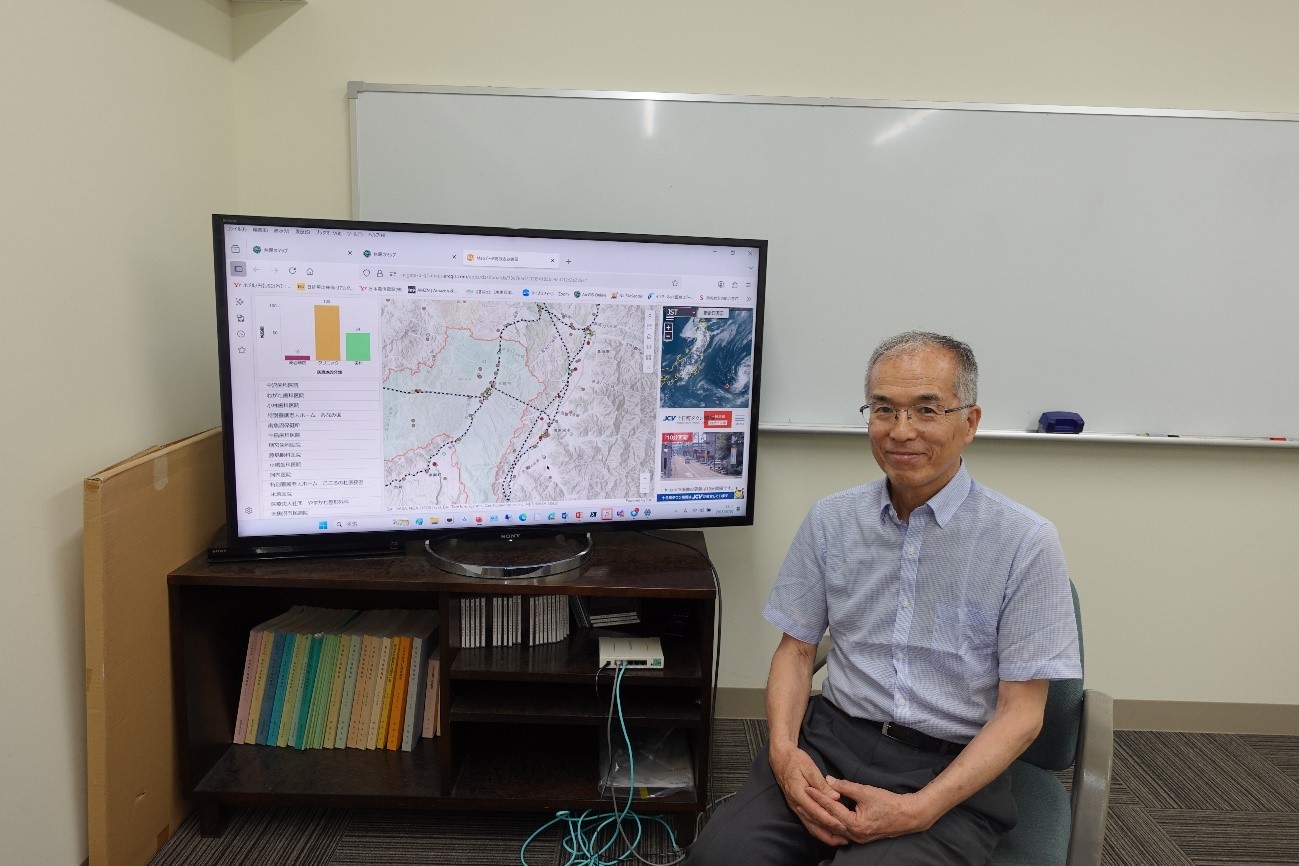
Niigata University carried out a demonstration experiment for research on telemedicine infrastructure aimed at new health promotion in mountainous areas with heavy snowfall in the Tokamachi area of Niigata Prefecture.* We interviewed Hideo Makino, professor emeritus at the Faculty of Engineering, Niigata University, for an overview of the demonstration experiment and the roles SINET played in it. (Interview date: July 7, 2025)
* Part of this research was supported by the Research Institute of Science and Technology for Society under the Japan Science and Technology Agency (JST-RISTEX) (Yugo Shobugawa: Scenario generation for a new community-based health promotion model using high-speed data communication and artificial intelligence in mountainous areas with heavy snowfall).
Please tell us about the demonstration experiment in Tokamachi, Niigata Prefecture.
Makino: This demonstration experiment was conducted for the purpose of solving medical issues, including access to visiting care and hospitals due to the aging and decreasing population in the city of Tokamachi in Niigata Prefecture. For example, the aging of local residents has led to increased needs for nursing and end-of-life care at home. It is therefore urgent to develop visiting medical and nursing care services. In particular, the Tokamachi area has many mountainous districts with heavy snowfall, which are sometimes snowed in during winter. The experiment explained below was conducted as an application of high-speed mobile communication infrastructure using mobile SINET in order to explore the viability of telemedicine.
- Simplified measurement of communication speeds using 5G routers located indoors or outdoors at the time of heavy snowfall
- Presentation of examples of Bluetooth Low Energy (BLE) connection between medical equipment and a PC or smartphone
- Provision of information on medical institutions and related information in the Tokamachi area through the Geographic Information System (GIS) as an example of a medical information service
Specifically, we conducted a fundamental experiment at the Tokamachi City General Medical and Welfare Center, which is located adjacent to the Niigata Prefectural Tokamachi Hospital and provides regional medical care. We installed one Wi-Fi router and one 5G mobile router with a built-in battery in this facility, acting as a temporary mobile clinic. Then, we observed the transmission of images captured by patients using their smartphones and data measured with thermometers and other instruments via Bluetooth, as a simulation of mobile medical consultation. In the event of heavy snowfall, it may take more time than usual to visit a patient’s home and return to the clinic for visiting care or nursing care. The entrance to the house to visit may be difficult to find as it is covered with snow. We mounted a global positioning system (GPS) device (GNSS-CLAS : Global Navigation Satellite System – Centimeter Level Augmentation Service) on a vehicle used for visits to acquire positional information on the visiting nurse and precisely identify the route to the patient’s house and the entrance location using mobile SINET.
What difficulties did you face in the demonstration experiment, and what achievements have you made so far?
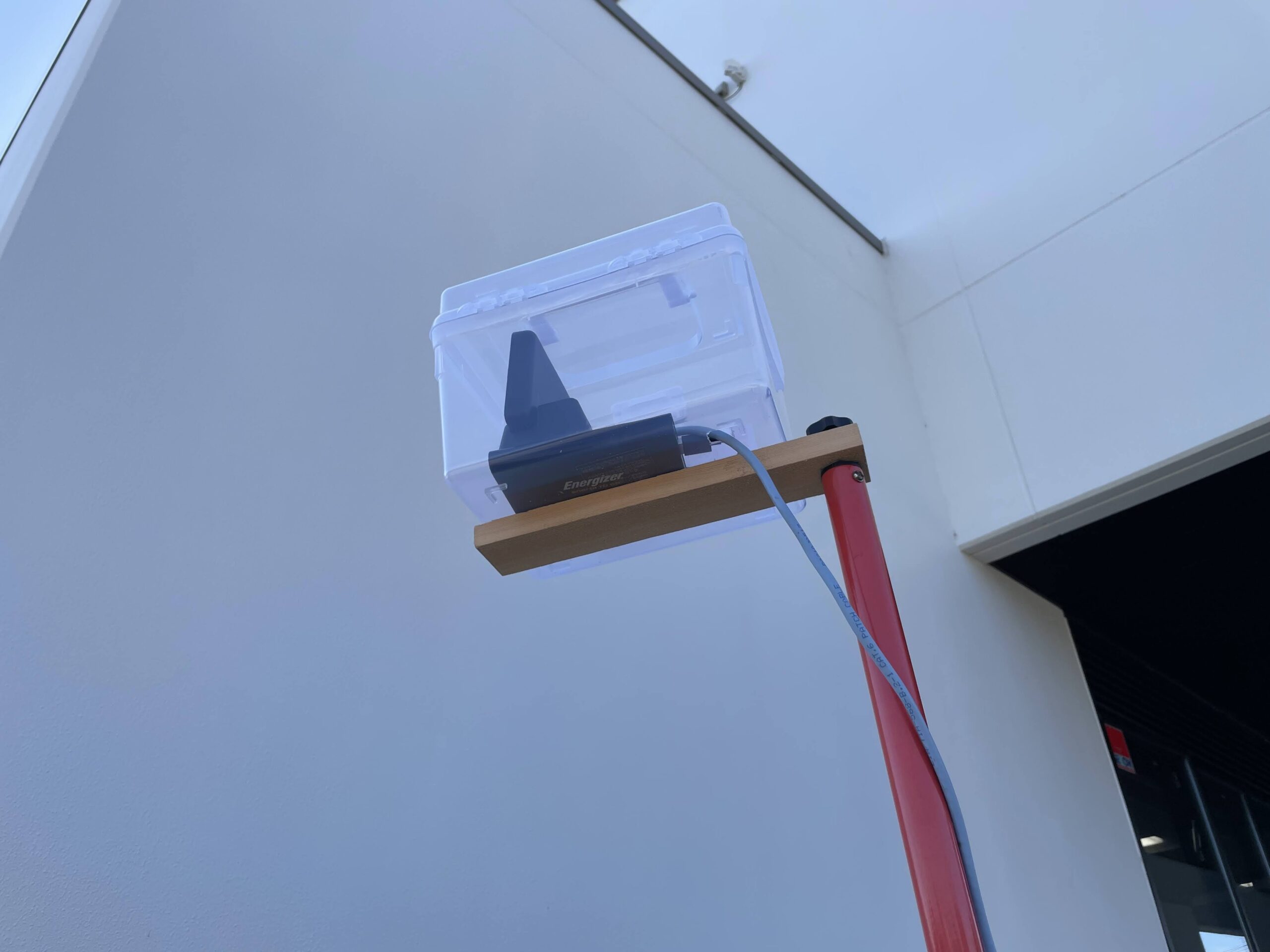
Makino: In the Tokamachi area, mobile clinics may be buried under snow during heavy snowfall. In such cases, a sufficiently high-speed mobile communication environment may not be available, or no data may be obtained. In preparation for that, we introduced several ideas, including installing the 5G mobile router outside the window. Although the indoor communication environment had previously been 4G, we confirmed that 5G communication was established through this approach (*according to the display, since the ultra-high-speed 5G communication network was not yet in service at the time).
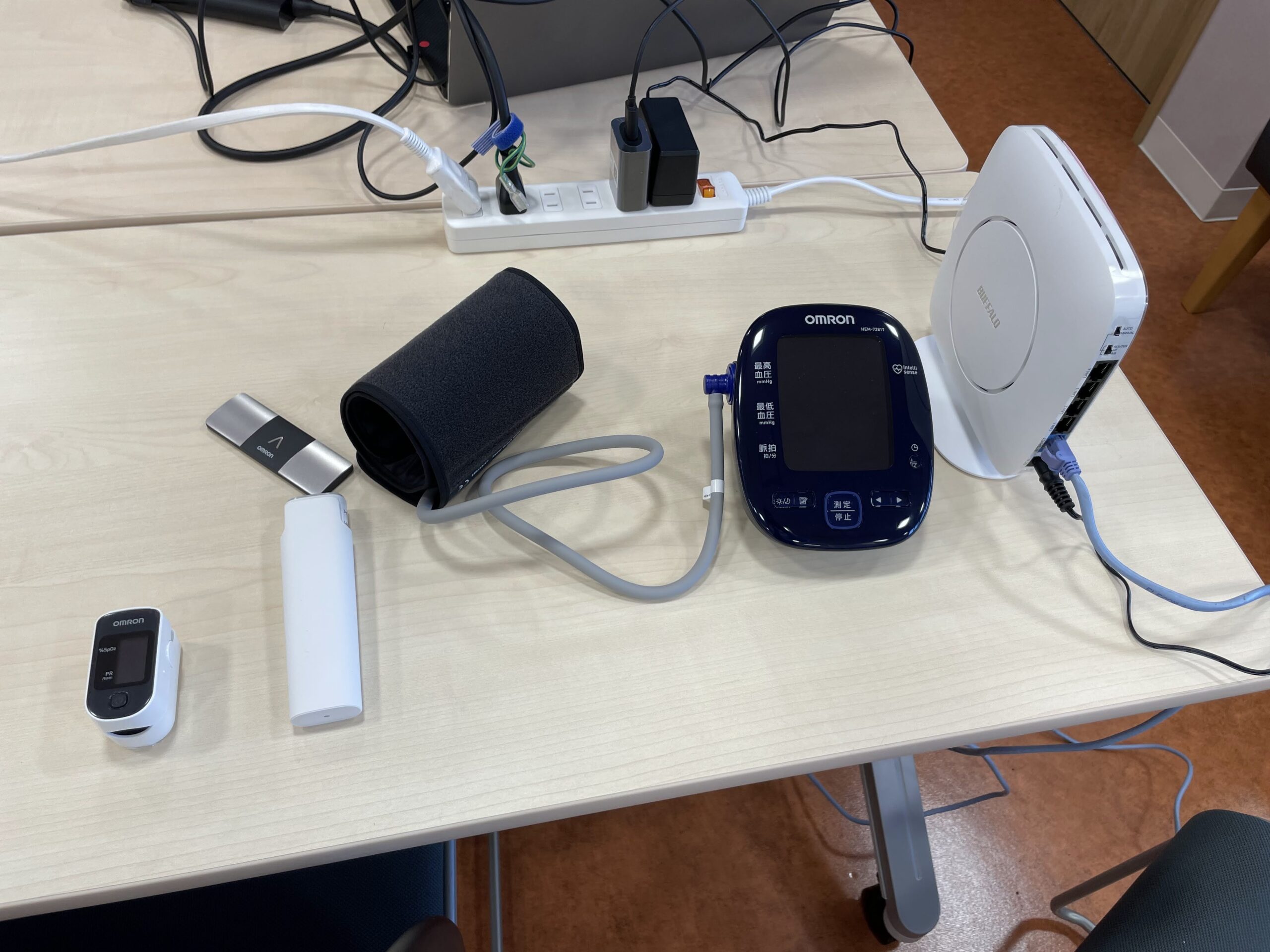
In addition, with regard to the medical equipment used in the demonstration experiment, we learned that an app to connect the BLE-ready health data measuring instruments to the data collection terminal would be required to consolidate measured data on a single computer and establish an IoT system. In this demonstration experiment, we used a thermometer, a pulse oximeter, a sphygmomanometer, and other devices from OMRON Healthcare Co., Ltd., as well as a free-of-charge app provided by the same company. (The server system we used was a fee-based one.) In addition, we independently developed an app for data entry from the thermometer used on-site for measurements (produced by A&D Co., Ltd.) and a GIS app for viewing images and positions at the time of measurement. Data on personal information collected, such as body temperatures, was received via the BLE transfer protocol, but it was necessary to transfer the data to the hospital over a closed network rather than a general Internet connection. In this respect, SINET’s dedicated connection was helpful to the introduction.
The experiment required medical professionals to learn to use measuring instruments with new communication features and created some additional burdens, including troublesome data communication. To collect data, individual patients also had to prepare smartphones as needed. To minimize burdens on workers for mobile telemedicine, we modified the measurement system and organized open seminars and symposiums. As I explained, I think it is essential to improve hardware and systems and to enhance operational measures to train medical and nursing care personnel to provide such care in mountainous areas, where access to hospitals is worsening amid a shortage of medical personnel and the consolidation of medical facilities.
Please tell us about the network configuration as well.
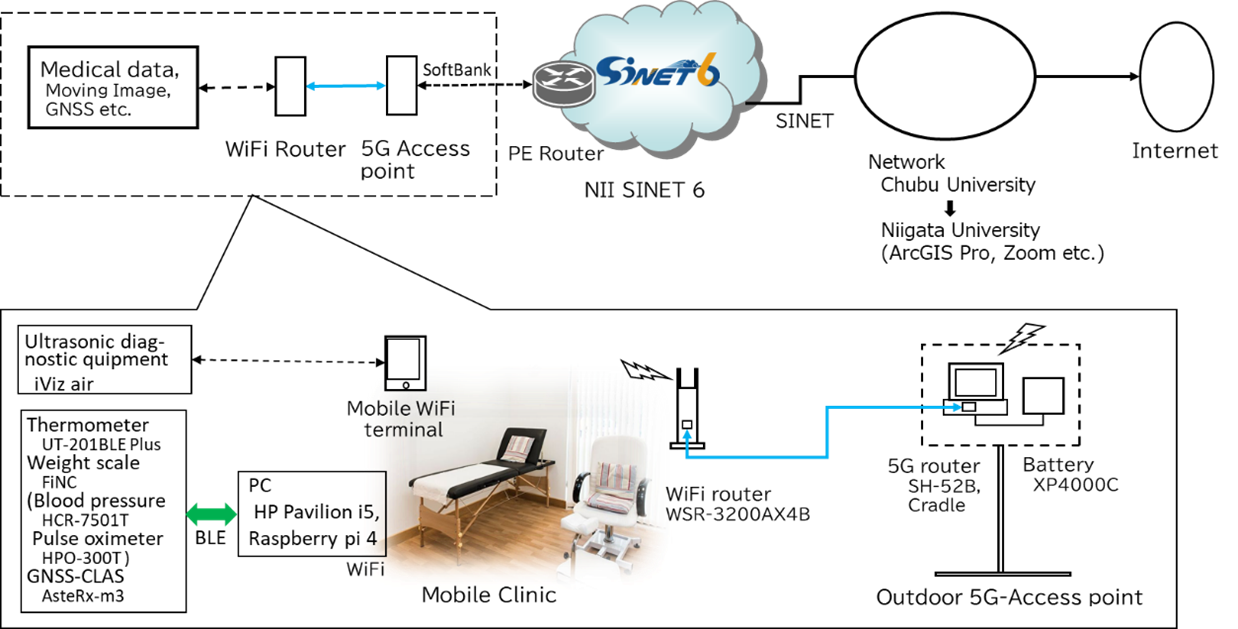
Makino: First, visiting nurses and other medical professionals sent videos and images captured with ultrasound imaging devices and data from IoT medical equipment directly from where they practice care or via the mobile clinic on mobile SINET. For mobile medical care, the outdoor 5G mobile router was connected via an outdoor Ethernet cable to the indoor Wi-Fi terminal. Data was sent via a router at Chubu University to Niigata University and then processed and viewed. We previously conducted a joint study with Chubu University on a GIS that would display accident and emergency information on a map. For that reason, Chubu University kindly accepted that a router be installed on its premises.**
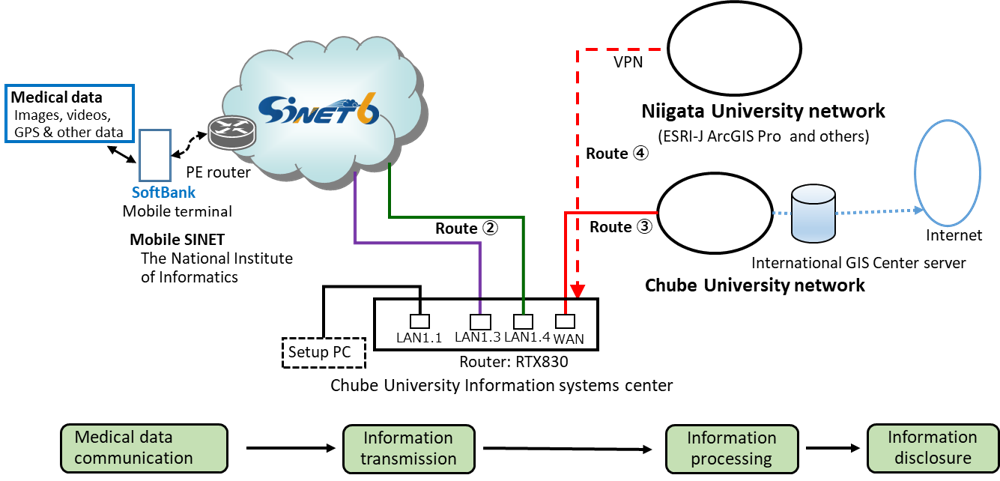
** Chubu University: Joint Usage/Research for Digital Earth to Address Emerging Complex Systemic Problems IDEAS201811
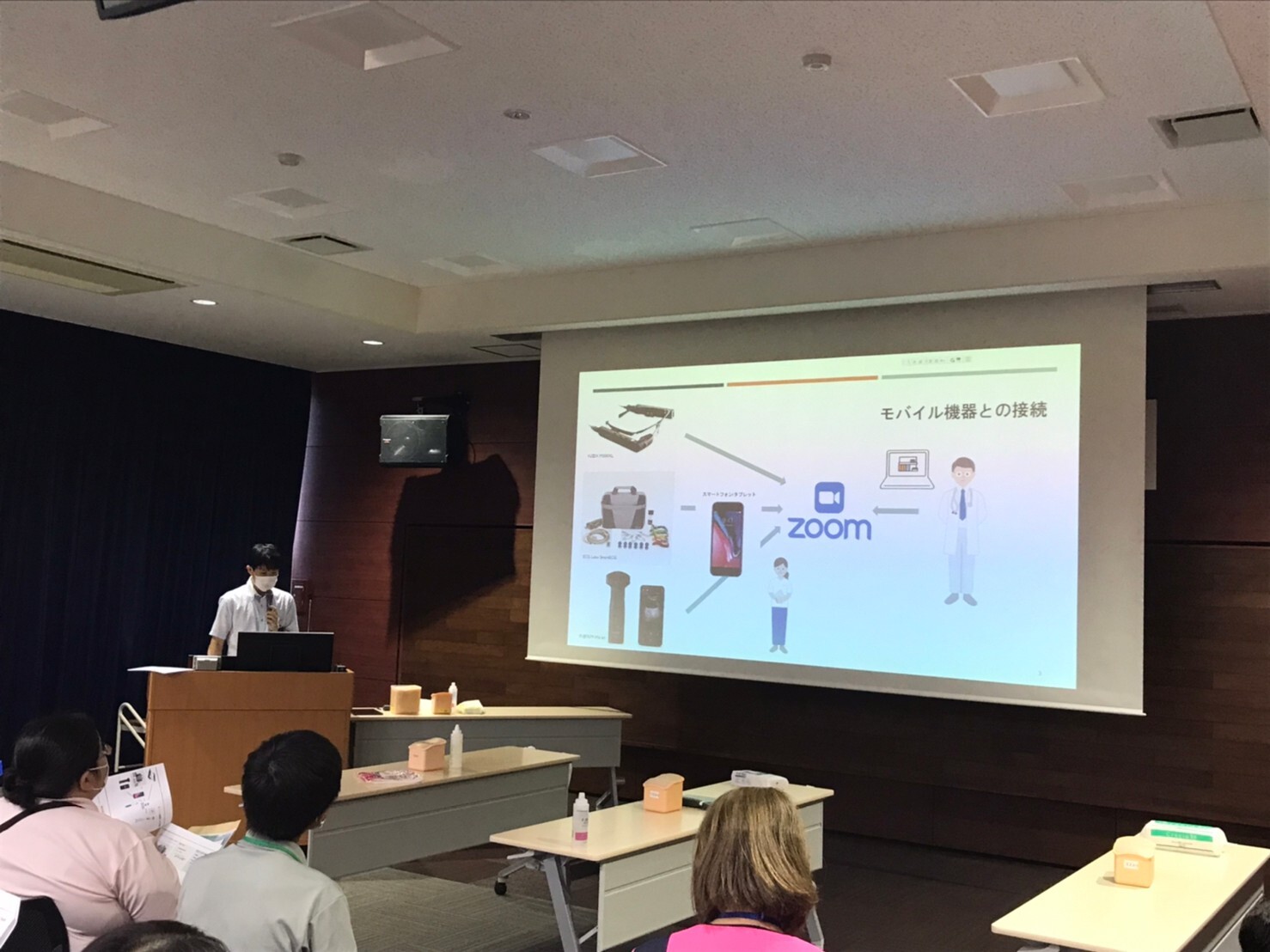
Makino: Next, I will talk about the basic network configuration. In this experiment, we operated five terminals equipped with SIM cards. They comprised three 5G smartphones, one 5G mobile router, and one 4G mobile router. Specifically, signals from mobile terminals are sent to the router in the Chubu University Information Systems Center. After that, they are processed at Niigata University. We used Zoom to send and receive images and videos, and OMRON connect to collect and process medical data. The GIS software we used for viewing results and others is ArcGIS Pro from Esri Japan Corporation.
In this demonstration experiment, using mobile SINET allowed us to take advantage of a high-speed private circuit without the need to sign up for separate contracts with carriers. That was very convenient and helpful. While we had initially planned to conduct a high-speed 5G mobile experiment, we were unable to do so in Tokamachi because of delays in the carrier’s construction of communication equipment in the area. Once large-capacity communication becomes available in the future, we will be able to send data—including high-definition videos—without delays using 5G.
What is the future outlook for the project?
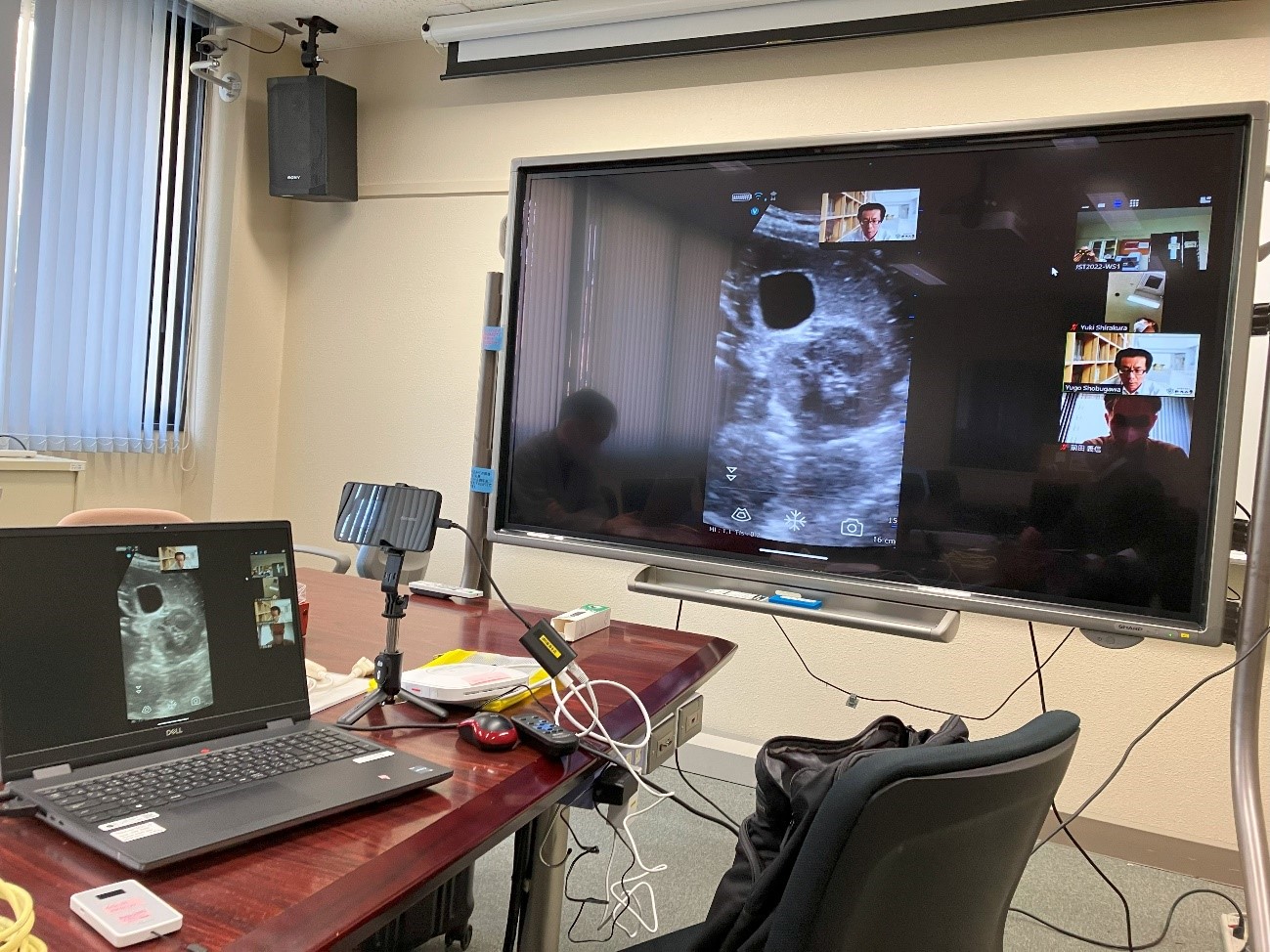
Makino: The demonstration experiment aimed to build telemedicine infrastructure using mobile units and to develop medical professionals, such as doctors, nurses, and care workers, who would use the data obtained. The collaboration with the NII helped us use mobile networks smoothly. I think that we were able to communicate the appeal of mobile communication in mountainous areas with heavy snowfall relatively easily. In terms of future prospects, it is possible, for example, that support for the advancement of hand-held ultrasound imaging devices will be introduced. In the past, skilled doctors watched two-dimensional ultrasound images for diagnosis. Introduction of the latest micro-electro-mechanical system (MEMS) technology and development of AI diagnostic assistance methods will provide more advanced diagnostic assistance with three-dimensional online images. As the saying goes, seeing is believing, and the demonstration of the mobile ultrasound imaging device in a workshop was well received. I hope that the future spread of telemedicine based on high-speed mobile communication will accelerate scalable advancement of medical care, including functional upgrades and weight reduction of equipment.
Meanwhile, as reported in newspapers and other media, hospital management is becoming difficult in rural regions. In this respect as well, telemedicine will be one effective solution for mountainous areas with heavy snowfall, where the population is aging and shrinking. For the implementation of telemedicine, it is necessary to seek help not only from local governments but also from private businesses. It is anticipated that costs will rise to such a high level that individual communities will become unable to cope. I believe that broader research opportunities involving demonstration experiments like this will yield achievements with a major viewpoint to local governments, medical institutions, private businesses, and universities. Going forward, I strongly hope that we will be able to provide more practical examples of how to solve regional issues using mobile data to build a network of all medical personnel in society.